

98% fewer false positives

Focus on reachable alerts only


It’s time to triage the
fast, accurate way.


© 2026 Semgrep, Inc. Semgrep is a registered trademark of Semgrep, Inc.
Why Snyk around?
Semgrep gives you accurate, actionable findings that developers trust.

98% fewer false positives
Auto-triage in minutes
AI-assisted fix guidance







You can’t move at speed with Snyk
1. Too many false positives
Snyk creates unnecessary noise for developers, wasting their time and distracting them from real threats.

2. Lack of transparency
The black-box approach forces you to blindly trust it, and means you can’t get full control over your code.

3. Developer frustration
Security teams spend too much time on manual triage, often for recurring issues.

Introducing the smart way to triage code
Fewer false positives. Higher baseline accuracy.
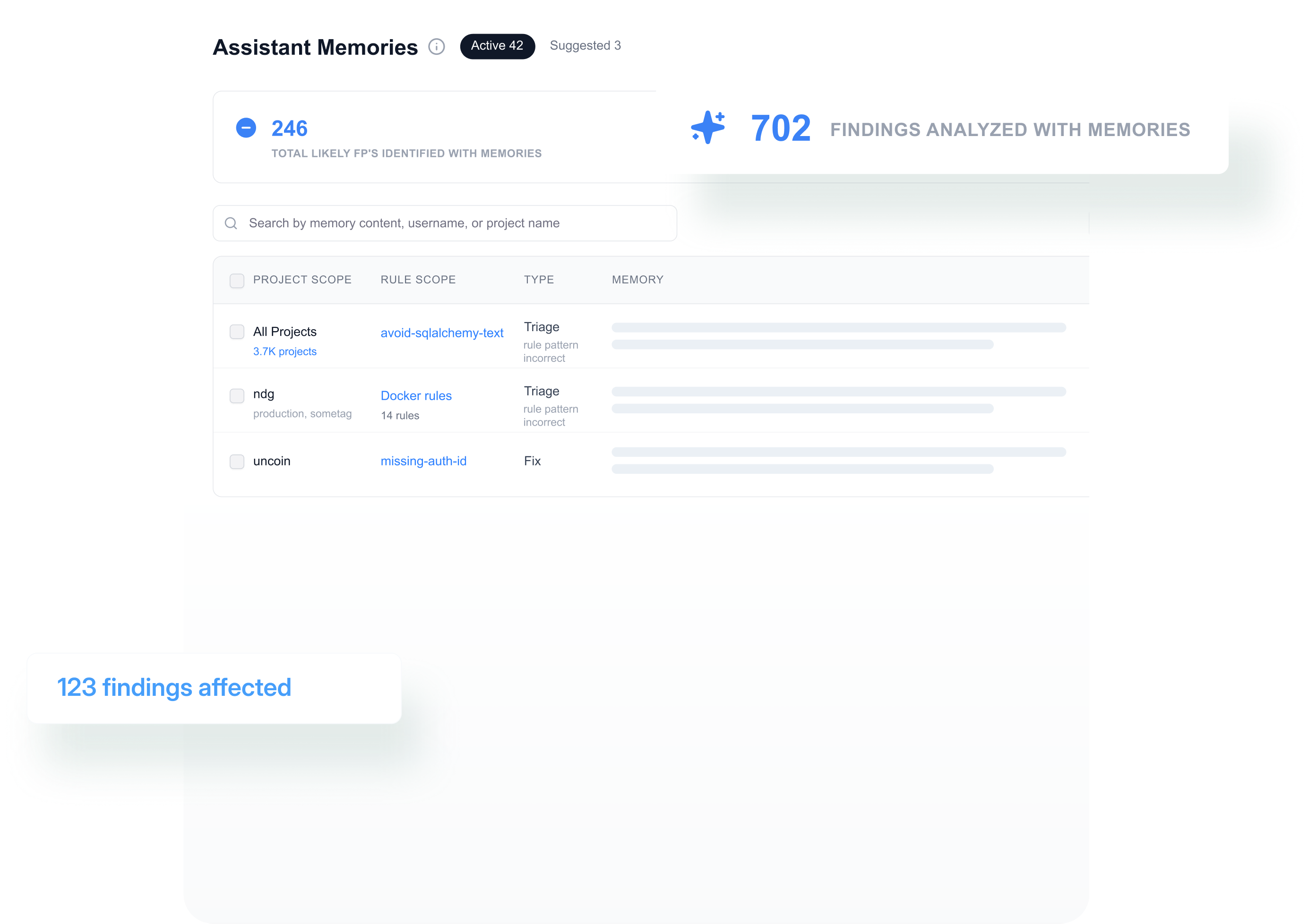
Semgrep Assistant reduces false positives by 20% the day you turn it on. Over time, it learns from triage decisions to continually cut your triage workload, and offer more accurate findings.
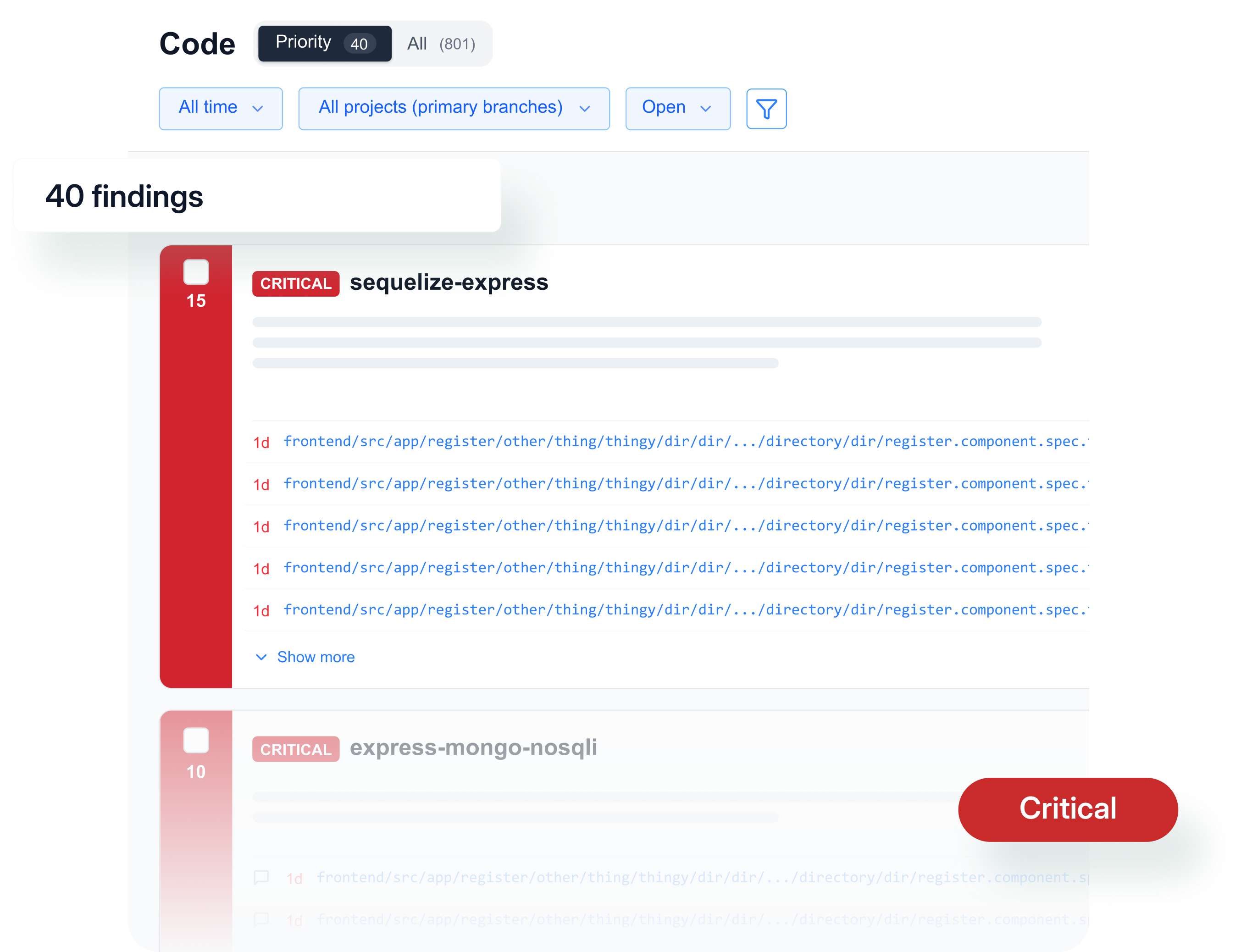
See exactly what you need to focus on
Semgrep presents only reachable findings so developers can focus on the most important issues, and see the exact lines of code with the vulnerability.
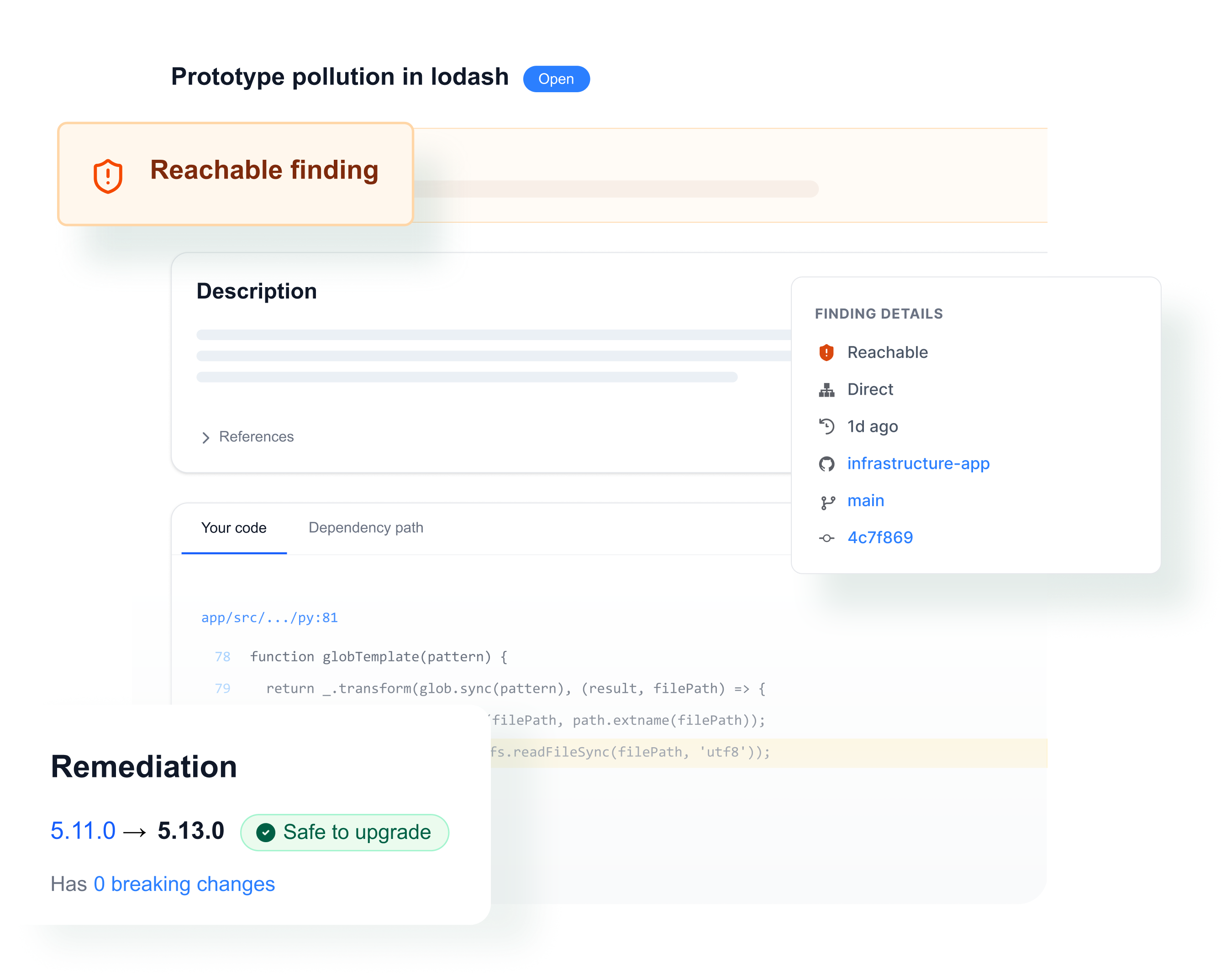
Find and fix the real issues faster
Semgrep Assistant recommends an 'auto-fix' when it finds
true positives, enabling teams to resolve issues 10x faster
without manual research.
Let’s go head to head:
Snyk vs Semgrep


Why security teams love Semgrep

8+ hours saved per week
On average, security engineers cut eight hours of time spent on code triage.
30+ minutes saved per finding
Skip hours of research and implementing a fix. Instead, you can spot-check an auto-generated code snippet in minutes.
96% agree rate
After analyzing over 6 million security findings, Semgrep has a 96% agreement rate from users and security researchers.
We make triage easy as 1, 2, 3
Semgrep Assistant detects the false positives that static analysis misses by understanding the mitigating context around a finding.
- Filter out the false positives


- Get step-by-step directions
Engineers and developers get tailored remediation guidance in their PRs, with the reasoning to build their knowledge on secure design practices.


- Never triage the same issue twice
Semgrep learns your organization-specific context as you build, reducing the number of future alerts without custom rules.


How they compare on what really matters
Snyk

Too much noise from false positives
Requires third-party tools
Long scans and frequent time-outs
Black-box approach limits visibility
Security engineers still do slow, manual work
Semgrep

Reduces false positives by 98%
Integrates with Jira and Slack
Shows only exploitable, high-priority issues
Manage everything in one place
AI-assisted step-by-step fix guidance
Automatically fix issues in minutes
Never triage the same issue twice
FAQs

Both platforms are modern SAST tools. Snyk generates excessive noise for development teams, and burdens already time-strapped AppSec teams with extra work to verify vulnerabilities. By comparison, Semgrep dramatically reduces false positives by 98%, cutting down on time that AppSec teams would otherwise need to spend investigating manually.
Semgrep supports prioritization via reachability analysis and EPSS filtering, presenting only exploitable, high-priority issues to developers. It also enables tailored, step-by-step remediation guidance to accelerate issue resolution significantly faster than the manual filtering required with Snyk.
Semgrep gives teams greater control over which findings are surfaced to developers, integrates into code review workflows, and supports fast scans (even for monorepos). By contrast, Snyk offers generic fix guidance, and you must deal with more context switching, longer scan times, and time-outs.
A third-party benchmark by Doyensec reported that reviewing findings took about 2.5 hours with Semgrep, compared to 17.5 hours with Snyk. This is a direct result of Semgrep’s capabilities in eliminating false positive noise, and helping AppSec teams prioritize and focus on what matters.